
Buy Here Pay Here vs Traditional Auto Financing (2026 Guide)
Buy here pay here (BHPH) financing means the dealership is also your lender, so approval is based on your income and residence instead of your credit score. That makes it a realistic path if a bank has already turned you down. Traditional financing — through a bank, credit union, or a dealer-arranged lender — rewards good credit with lower rates but is harder to qualify for.
With decent credit, a traditional loan almost always costs less over the life of the car. With bad credit, no credit, a past bankruptcy, or a prior repossession, in-house financing is often the way to drive home today. The choice comes down to your credit and how fast you need a car.
Table of Contents
Why Your Financing Choice Matters
The same car can cost two buyers thousands of dollars apart, and the difference isn’t the car — it’s the interest rate, the term, and the lender behind it. Buy here pay here and a bank or credit-union loan aren’t two ways to buy the same car; they’re two different doors, and which one opens depends heavily on your credit.

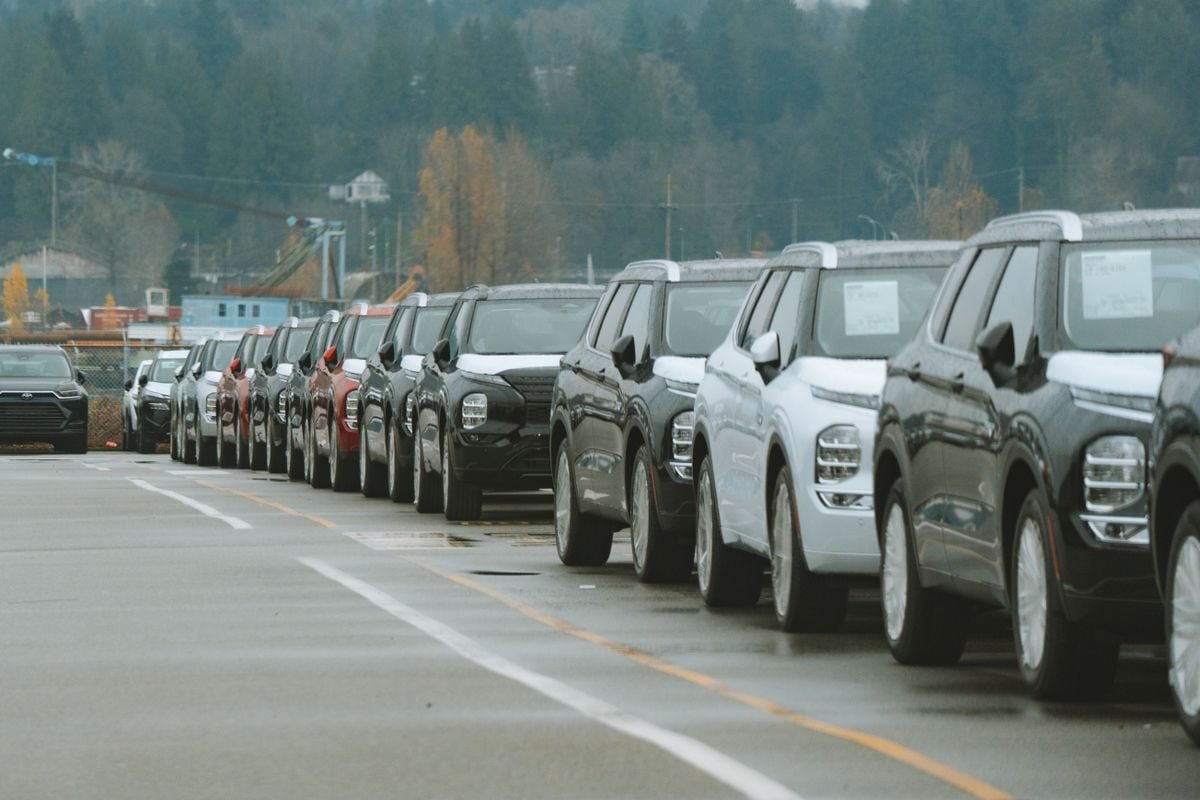
Two financing paths lead to the same lot — which one fits comes down to your credit.
What Is Buy Here Pay Here Financing?
Buy here pay here is a financing model where the dealership lends you the money directly — you pay it, not a bank. Because the dealer is the lender, the approval decision is theirs, with no outside bank reviewing your score.
-
Who it’s for. Buyers banks tend to decline — bad credit, no credit, a recent bankruptcy or repossession, or hard-to-document income (self-employed, or paying with an ITIN).
-
How approval works. The dealer weighs whether you can make the payments — proof of income, residence, and insurance — often same-day. At Owings Auto, the deciding factor isn’t the score but about $2,000 per month in net income, with weekly payments and a printed price sheet listing each vehicle’s sale price, down payment, and payment.
What Is Traditional Auto Financing?
Traditional auto financing is any loan funded by an outside lender — a bank, a credit union, or a finance company the dealer works with — where your credit drives approval and your rate. You borrow from and repay the lender; the dealer just sells you the car. It comes in three forms:
-
Bank loans. Apply directly, get approved (or pre-approved) for an amount, and buy. Strong credit gets strong rates.
-
Credit union loans. Member-owned, often the lowest used-car rates — if you belong to one, call before you shop.
-
Dealer-arranged financing. The dealership shops your application to a network of lenders and presents an offer — convenient, though it may add a small margin.

With traditional financing, your credit score does most of the talking on the rate.
Buy Here Pay Here vs Traditional Financing: Side by Side
Here’s how the two models compare on the factors that matter.
|
Factor |
Buy here pay here (in-house) |
Traditional financing (bank, credit union, dealer-arranged) |
|---|---|---|
|
Credit requirements |
No minimum score; approval based on income and residence |
Credit score and history are central; weak credit means denial or a high rate |
|
Down payment |
Often required; varies by lot and vehicle |
Sometimes optional with strong credit; lowers your loan and rate when offered |
|
Interest rates |
Higher, reflecting the risk the dealer takes; some lots publish a range |
Lower for good credit; rises sharply as credit weakens |
|
Monthly payments |
Often weekly or biweekly, timed to paydays |
Almost always monthly |
|
Approval speed |
Frequently same day |
Minutes to a couple of days, depending on the lender |
|
Vehicle selection |
Limited to that dealer’s own lot |
Any car you can find, within your approved amount |
|
Loan flexibility |
Terms set by the dealer; less room to negotiate rate |
More competition; you can shop lenders against each other |
|
Documentation |
ID, proof of income, proof of residence, insurance |
The same, plus a credit pull and tighter income verification |
|
Credit reporting |
Varies — some lots report to the bureaus, many don’t (ask first) |
Almost always reported, so on-time payments build credit |
|
Best fit for |
Bad credit, no credit, past bankruptcy or repossession, need a car now |
Good or fair credit, time to shop, want the lowest total cost |
The first row matters most — your credit usually decides which column is even realistic.
What Each Option Actually Costs: A Worked Example
The rate sounds abstract until you put it in dollars. Here’s the same $12,000 car (after down payment), financed two ways over 48 months — only the rate changes. (Illustrative rates; the in-house figure uses the top of Owings Auto’s published 15.9%–17.9% range, and your actual rate depends on your credit, lender, and car.)
|
|
Credit-union loan (illustrative 9% APR) |
In-house / buy here pay here (17.9% APR) |
|---|---|---|
|
Amount financed |
$12,000 |
$12,000 |
|
Term |
48 months |
48 months |
|
Monthly payment |
~$299 |
~$352 |
|
Total interest |
~$2,350 |
~$4,900 |
|
Total of payments |
~$14,350 |
~$16,900 |
Total of payments — same $12,000 car, 48 months
Credit-union loan · 9% APR
~$14,350
In-house / buy here pay here · 17.9% APR
~$16,900
Gap ≈ $2,550 over four years (about $53 a month) — the price of being approved when a bank would have said no.
That gap is the price of access. (Experian’s data consistently shows subprime borrowers pay sharply higher used-car APRs than prime, so the real spread can be wider.) If you can qualify for the lower rate, take it; if not, the in-house loan still gets you a reliable car now, and you’re not locked in — paying on time can set up a refinance later. In our experience, buyers rarely regret the car; they regret shopping the weekly payment instead of the total of payments.
Advantages of Buy Here Pay Here

In-house financing approves on income, so a closed door at the bank can still open here.
-
Approval when banks say no. A BHPH lot evaluates you on income, opening a door that was closed.
-
Speed. Many buyers are approved and driving the same day — no outside underwriting.
-
One place for everything. You shop, finance, and pay in one spot, and Owings runs its own on-site service shop — uncommon for the model, so after-sale repairs are simpler.
-
Payments around your paycheck. Weekly or biweekly can be easier than one big monthly bill.
-
Transparency, at the better lots. Owings names its 15.9%–17.9% APR options up front and every customer receives a printed price sheet — so you compare the real cost before committing.
Advantages of Traditional Financing
-
Lower rates for qualified buyers. Good credit can mean a fraction of a higher-risk rate.
-
Shop any car, anywhere. A bank or credit-union approval isn’t tied to one lot — buy from any dealer or private seller within your approved amount.
-
Leverage to negotiate. Pre-approval lets you treat the car and the financing as separate deals while lenders compete for you.
-
Builds credit reliably. Mainstream lenders report to the bureaus, so every on-time payment strengthens your file.
-
Longer terms and larger amounts. They can finance pricier vehicles over longer terms — lower payment, more total interest.
Potential Drawbacks of Buy Here Pay Here
-
Higher interest rates. Lending to buyers banks turn down means rates above a prime loan — the core trade-off, and why the total cost, not the weekly payment, is the number to watch.
-
You’re choosing from one lot. Your selection is whatever that dealer stocks. The flip side: a well-stocked lot still offers range — Owings carries cars, trucks, and SUVs across a range of makes in its used inventory.
-
More frequent payments. Weekly or biweekly schedules suit some budgets and frustrate others; if you’re paid monthly, it means staying on top of the calendar.
-
Credit reporting isn’t guaranteed. Some lots report to the bureaus, some don’t. If building credit is a goal, ask before you sign.
One lot limits your selection, but a well-stocked one still spans cars, trucks, and SUVs.
None of this makes BHPH a bad choice — for a buyer who can’t get approved elsewhere, a higher rate on a reliable car beats no car at all. It just means going in with eyes open.
Potential Drawbacks of Traditional Financing
The better rates come with real catches.
-
Harder to get approved. Damaged or thin credit can mean an outright denial — and the lower rate doesn’t help if you can’t qualify.
-
Strict requirements. Lenders set minimum scores and debt-to-income limits; a bankruptcy or repossession can disqualify you for years, however steady your income is now.
-
Slower underwriting. A bank loan can take a day or more — a real cost if you need a car this week.
-
It turns away the buyers who most need it. Those rebuilding after a setback are the ones banks most often decline — the gap BHPH fills.
Which Option Is Better for Bad Credit?
“Bad credit” covers a wide range of situations. Match yours to the realistic path:
-
Recent bankruptcy or repossession. Most traditional lenders decline for a period after either; BHPH is usually the realistic route, since approval rests on current income, not past damage.
-
No credit history at all. First-time and ITIN-only buyers often have nothing to score. A BHPH lot can approve you on income — and a credit union you already bank with is worth a try.
-
Fair credit (roughly 580–669). The gray zone: get a quote from a credit union and a BHPH lot and compare total cost. Don’t assume a bank will decline you — or that its rate will be affordable.
-
Turned down once. One denial doesn’t close every door — a different lender, a cosigner, or a larger down payment can change the answer, and so can an in-house lot that doesn’t use a score.
Good or fair-to-good credit↓Traditional loanLowest APR · shop any car
Fair credit (≈580–669)↓Compare bothPick the lower total of payments
Bad / no credit · bankruptcy · repo↓Buy here pay hereApproved on income, not a score
If a traditional lender will approve you at a rate you can live with, take it; if not, BHPH gets you into a reliable car. For the full buying process — taxes, fees, budgeting — see the guide to buying a used car in Texas; the decision matrix below sums up the best fit.
Not sure which you’ll qualify for? You can start a financing application in a few minutes with no obligation, or browse the used inventory first to see what fits your budget.
Can Buy Here Pay Here Help Rebuild Credit?
A BHPH loan only helps your credit if the dealer reports your payments to the bureaus — and not all do, so ask before you sign: do you report, and to which? If they don’t report to Experian, Equifax, or TransUnion, paying on time keeps your car but does nothing for your score.
When a lot does report, on-time payments can rebuild a damaged file — payment history is the biggest factor in most scores. A few caveats:
-
Recovery is gradual, not overnight.
-
A missed payment gets reported too, and sets you back.
-
You can track progress free with each bureau; the Consumer Financial Protection Bureau explains your right to free reports.
Treat credit improvement as a possible benefit, not a promise — the gain depends on the dealer reporting and on you.
Can You Refinance Out of a Buy Here Pay Here Loan?
Yes — and for many buyers, that’s the smartest way to use it. Many start with a BHPH loan because it’s the only approval they can get, then refinance into a cheaper bank or credit-union loan once their credit improves. The higher rate doesn’t have to be permanent.
The path usually looks like this:
-
Buy and pay on time. Six to twelve months of consistent payments is the usual minimum a refinance lender wants to see.
-
Let your credit recover. On-time payments that report to the bureaus rebuild your score.
-
Shop a refinance. Once your score and income look stronger, apply for a new loan that pays off the old one at a lower rate.
A refinance works best with positive equity, an APR meaningfully lower after fees, and enough term left to save real interest. It isn’t guaranteed, but used well, in-house financing is a bridge to a car and the track record to lower the cost later.
Questions to Ask Before Choosing a Financing Option
The fastest way to compare two offers is to ask both sides the same questions and write down the answers. Bring this list to any lender or lot:
-
What’s the APR, and what’s the total of payments? Get both in writing — the real cost, not just the monthly or weekly figure.
-
What term and payment schedule? Monthly, biweekly, or weekly — and how many months until it’s paid off.
-
How much down payment, and can a trade-in count toward it?
-
Do you report my payments to the credit bureaus? If building credit matters, confirm which bureaus before you sign.
-
Any prepayment penalty? You want the freedom to pay ahead or refinance later without a fee.
-
What’s included after the sale? Ask whether a service contract or warranty comes with the car, what it covers, and whether the dealer has its own service shop.
A dealer who answers these plainly and puts the numbers on paper is one worth doing business with.
Common Mistakes Buyers Make When Choosing Financing
Most loan regret traces to one of these avoidable mistakes:
-
Not knowing their credit before they shop. Check your score first so you know whether a bank rate is even realistic.
-
Skipping the credit union. Members often get the lowest used-car rates, yet many never ask — one call can save thousands.
-
Assuming one denial means no options. A cosigner, a bigger down payment, or an in-house lender can change the outcome.
Frequently Asked Questions
What’s the difference between buy here pay here and traditional financing?
With buy here pay here, the dealership is your lender and approves you on income rather than credit score. With traditional financing, an outside bank or credit union funds the loan and your credit sets the rate. BHPH trades a higher rate for easier approval; traditional trades stricter approval for a lower rate.
Is buy here pay here a good option for bad credit?
Often, yes. When a bank has turned you down for bad credit, no credit, a bankruptcy, or a repossession, a BHPH lot can still approve you because it looks at your income instead of your score. The trade-off is a higher interest rate, so it makes the most sense when traditional financing isn’t on the table.
Can buy here pay here help rebuild my credit?
Only if the dealer reports your payments to the credit bureaus — and not all do, so ask before you sign. When a lot reports and you pay on time, it can help rebuild a damaged file over time, though no single loan guarantees a result.
How much down payment do I need?
It varies by the lot, the car, and the path. In-house lots usually require a few hundred to a couple thousand dollars; with strong credit, a traditional lender may ask for little or none. A larger down payment always lowers what you finance and the interest you pay.
Can I refinance a buy here pay here loan later?
Yes, many buyers do. After several months of on-time payments and some credit recovery, you may qualify to refinance into a lower-rate loan that pays off the original. It isn’t automatic, but it’s a common way to start with in-house financing and lower the cost down the road.
Decision Matrix: Which Option Fits Your Situation
Match your situation to the most realistic path. Use this as the one-screen summary of everything above.
|
Your situation |
Best-fit financing |
Why |
|---|---|---|
|
Good or excellent credit, want the lowest cost |
Traditional (bank or credit union) |
Lowest APR, and you can shop any car anywhere |
|
Fair credit (roughly 580–669) |
Compare both |
Get a credit-union quote and an in-house quote, then pick the lower total of payments |
|
Bad credit, or already turned down by a bank |
Buy here pay here |
Approval is based on income, not a credit score |
|
No credit / first-time buyer |
BHPH, or a credit union you already bank with |
Income-based approval; a credit union may extend starter credit to members |
|
Recent bankruptcy or repossession |
Buy here pay here |
Banks decline for a period; in-house lots look at your current income |
|
Self-employed or ITIN-only |
Buy here pay here |
Built to handle income that’s harder to document the traditional way |
|
Need a car this week |
Buy here pay here |
Frequently same-day approval, no outside underwriting wait |
|
Want to rebuild credit and refinance later |
A BHPH lot that reports to the bureaus |
On-time payments build the record you need to refinance into a lower rate |
The Bottom Line
Neither model is universally better: traditional financing wins on cost when your credit qualifies, buy here pay here wins on access when it doesn’t. Know your credit, get a quote from both when you’re in the gray zone, and compare the total cost, not the payment. If a bank has turned you down, a transparent in-house lot is often the most direct path to a reliable car — and a chance to rebuild, if the dealer reports your payments.
Family-owned and serving North Texas since 1985, Owings Auto has helped 60,000-plus customers finance cars in-house — no bank in the middle, approval based on income rather than a credit score.
Every vehicle comes with a free 24-month / 24,000-mile Service Contract — engine, transmission, water pump, fuel pump, and radiator — backed by the dealership’s own on-site service shop. Customers receive a printed price sheet with each vehicle’s sale price, down payment, and weekly payment, and the published 15.9% to 17.9% APR options mean you see the rate before you commit, not after.
You can browse the full used inventory of cars, trucks, and SUVs online, start a financing application in a few minutes, or reach the team with questions. Owings is open Monday through Saturday (closed Sundays), with locations in Arlington and Fort Worth.

Trade In Your Car at a Buy Here Pay Here Dealership (2026)
Can You Trade In Your Car at a Buy Here Pay Here Dealership? By The Owings Auto Team · Reviewed…

Can You Buy a Car With Bad Credit in Dallas? A Step-by-Step Guide
Can You Buy a Car With Bad Credit in Dallas? A Step-by-Step Guide By The Owings Auto Team · Reviewed…
Buy Here Pay Here Near Dallas: Where Should You Buy?
By The Owings Auto Team · Updated July 2026 · About a 9-minute read Quick Answer If you need Buy…