Should You Buy a Car With a Rebuilt Title? A Texas Buyer’s Guide

By The Owings Auto Team · Updated July 2026
A rebuilt-title car with a low sticker price is one of the most tempting deals in the used market — and one of the easiest ways to lose money. The label means the car was once declared a total loss, repaired, and cleared to drive again. Sometimes that history is harmless. Sometimes it hides a bent frame or missing airbags you won’t discover until the day you need them.
So the only question worth answering isn’t “what is a rebuilt title.” It’s “is this particular rebuilt car actually worth it?” This guide gives you the framework Texas buyers need to answer that: which damage histories are worth the risk, which ones aren’t, how big the discount has to be to make sense, and how a rebuilt title follows you into financing, insurance, and resale.
Quick Answer
A rebuilt-title car is worth buying in Texas only when the original damage was cosmetic or minor, an independent mechanic confirms the frame and airbags are sound, and the price is at least 20–40% below clean-title value. Walk away from any rebuilt car that was flooded, burned, or structurally totaled — no discount offsets that risk — and remember the “Rebuilt Salvage” brand is permanent and will cut your resale value for the life of the car.
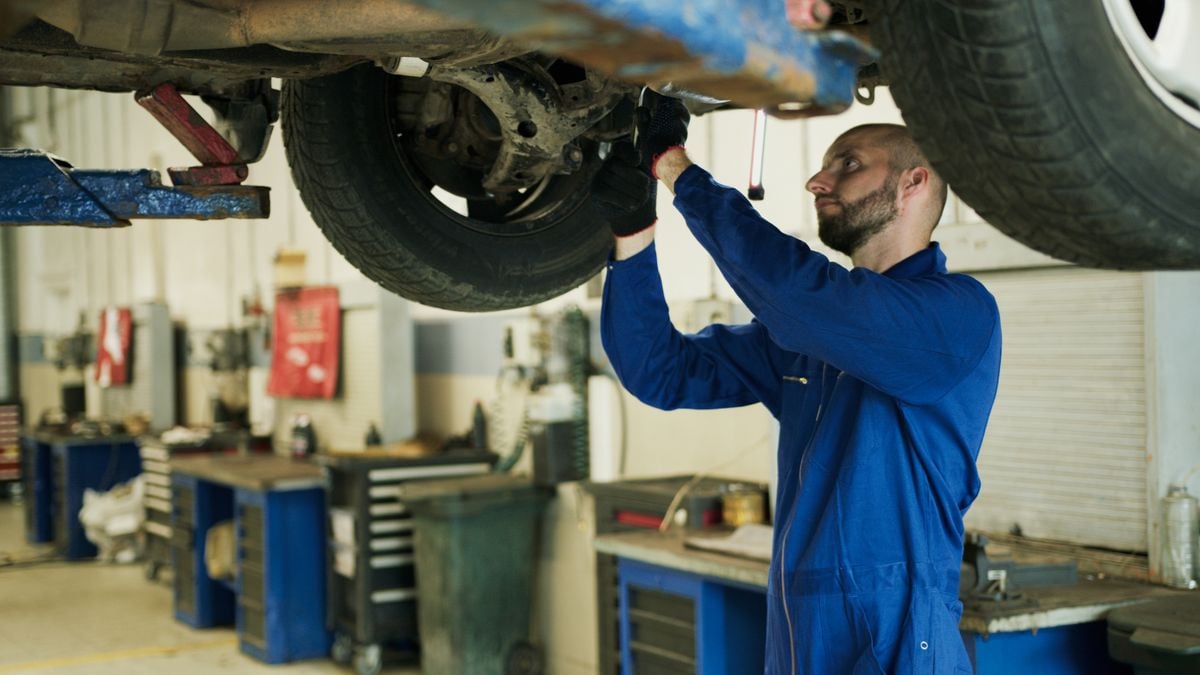
The frame and airbags decide whether a rebuilt car is a bargain or a liability — and only a lift-inspection reveals them.
Salvage, Rebuilt, and Nonrepairable: The Three Texas Brands
In Texas, “salvage,” “rebuilt salvage,” and “nonrepairable” are three different legal states — and only one of them is a car you can actually buy and drive. Confusing them is the first way buyers get burned, because a listing that says “salvage, runs great” is describing a car you legally can’t put on the road.
|
Texas brand |
What it means |
Can you drive it? |
|---|---|---|
|
Salvage |
Declared a total loss; not yet repaired to state standards |
No — cannot be registered or driven until rebuilt and re-titled |
|
Rebuilt Salvage |
A former salvage car, repaired and passed a state inspection |
Yes — can be titled, registered, and driven |
|
Nonrepairable |
Damage so severe the car is only good for parts or scrap |
Never — cannot legally be rebuilt or driven again |
Here’s the Texas-specific detail almost no buyer knows: Texas doesn’t flag a car as salvage at 70% or 80% of its value the way many states do — the repair cost has to exceed 100% of what the car was worth before the damage. That threshold is higher than most states use, so a Texas salvage brand usually signals a genuinely serious loss, not a lightly dinged car an insurer wrote off to save time. It also means an out-of-state car may carry a brand that Texas rules alone wouldn’t have triggered, which is why you check the branding history, not just the words on the current title. The Texas DMV salvage-brands page lists how each brand is defined.
When a Rebuilt Title Is Actually Worth Buying
A rebuilt title is worth considering when the damage that totaled the car was cosmetic or mechanically minor — not structural. Insurers total cars on economics, not just severity: on an older vehicle, even moderate damage can cost more to fix than the car’s low market value, so it gets a salvage brand despite being fundamentally sound. Those are the rebuilt cars worth a look.
The single most useful thing you can learn about a rebuilt car is what type of damage caused the brand. It predicts almost everything about the risk you’re taking on:
|
Original damage |
Typical risk |
Verdict |
|---|---|---|
|
Hail damage |
Cosmetic only; mechanicals and structure untouched |
Often a smart buy — one of the safest rebuilt histories |
|
Minor rear-end / low-speed collision |
Bumper and panel work; low if frame is clean |
Worth it if an inspection confirms no frame damage |
|
Stolen and recovered |
Varies; check for missing parts or interior damage |
Case by case — inspect closely |
|
Major front/side collision with airbag deployment |
Frame and SRS repairs that are costly and easy to fake |
High risk — most buyers should pass |
|
Flood or water damage |
Slow electrical and corrosion failure over months |
Walk away |
|
Fire damage |
Wiring and structural integrity compromised |
Walk away |
Notice the pattern: the rebuilt cars worth buying are the ones where the damage never touched the frame, the airbags, or the electrical system. Everything cosmetic can be verified with your eyes and a good inspector. Everything structural or electrical can hide.
When to Walk Away — No Matter the Price
Skip any rebuilt car that was flooded, burned, or structurally totaled, even if it looks flawless and the price is a steal. These three histories share one trait: the damage is invisible now but surfaces later, usually after your inspection window has closed.
-
Flood cars are the most dangerous because they present well. A detailed flood car can look and drive perfectly for three to twelve months, then fail electronically all at once as corrosion spreads through connectors and modules. Airbag and braking electronics are among the casualties.
-
Fire-damaged cars may have compromised wiring harnesses and heat-weakened structural metal that no repaint reveals.
-
Airbag-deployment rebuilds are where outright fraud is most common — more on that in the inspection section — because proper SRS restoration is expensive and easy to fake.
The reason “the price is amazing” isn’t a counterargument: on these cars, the low price is the warning. Sellers discount hardest exactly where the hidden risk is greatest.
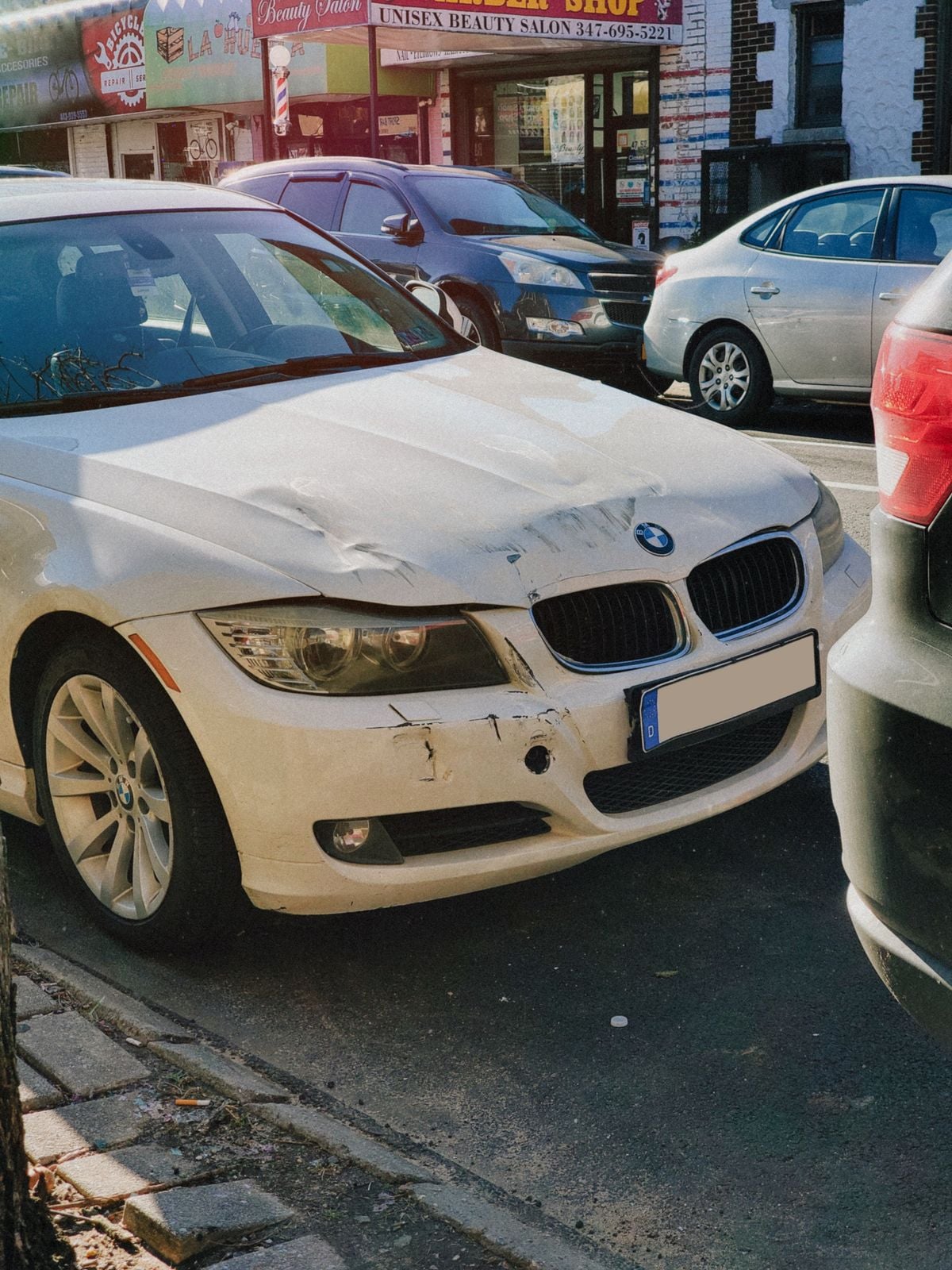
What caused the total loss matters more than how the car looks today. Front-end wrecks with airbag deployment are the hardest to verify.
How Much Cheaper Should a Rebuilt-Title Car Be?
A rebuilt-title car should cost at least 20–40% less than the same clean-title car — if the discount is smaller than that, you’re absorbing all the downside for none of the upside. That range isn’t arbitrary; it mirrors the resale hit the brand carries. If a rebuilt car is only 10% cheaper than a clean one, you’re paying nearly clean-title money for a car that will always sell, insure, and finance like a branded one.
Do the math against a real benchmark, not the seller’s number. Look up the clean-title value on Kelley Blue Book or Edmunds, then subtract 20–40% depending on the damage type. Lean toward 20% for verified hail, and 40% (or simply “no”) for anything structural. That’s your ceiling. Here’s a worked example on a car with a $16,000 clean-title value:
|
Scenario |
Fair rebuilt price |
What it tells you |
|---|---|---|
|
Priced at $14,500 (9% off) |
Overpriced |
You’re not being paid for the risk — negotiate hard or walk |
|
Priced at $11,000–$12,800 (20–30% off) |
In range for minor damage |
Reasonable if the inspection is clean |
|
Priced at $9,600 (40% off) |
Steep — ask why |
Fair for a heavier repair; make sure it wasn’t flood/fire |
One caution: a discount that’s too deep is its own red flag. If a rebuilt car is priced 50% or more below clean value, the seller is usually pricing in a problem they hope you won’t find.
The Inspection That Actually Protects You
Before buying any rebuilt-title car, pay an independent, ASE-certified mechanic to inspect the frame and airbags specifically — the two systems that decide whether the car is safe in a crash. Budget roughly $150–$300, and use your own shop with a frame rack, never a mechanic the seller recommends. This is the highest-return money in the entire purchase.
Tell the inspector exactly what to prioritize:
-
Frame and unibody — measured on a rack and confirmed straight, with proper welds and no cracks or filler at structural points. A frame that’s even slightly off ruins handling, tire wear, and crash protection.
-
Airbags and the SRS system — this is the big one. The mechanic should run an OBD-II scan of the airbag module to confirm every position is present with no fault codes, plus check for factory stitching behind the wheel, on the dash, and in the seats and headliner.
-
Flood evidence — musty odor, water lines under seats or in the trunk, silt in crevices, and corrosion under the battery tray. Pull back a corner of the carpet and feel the padding underneath for stiffness or dampness.
Expert tip — the airbag light trick: A common fraud is to install a small resistor or bulb so the dashboard airbag light stays off while the airbags themselves are missing. Turn the key to “on” and watch the warning lights: every light should flash and then clear. An airbag light that never illuminates at all is a red flag that someone disabled it — the airbags may not be there. Only an SRS scan and a factory-stitching check catch this.
Also run the free NICB VINCheck to flag salvage and theft records, and check for open recalls by VIN at NHTSA. Neither replaces a hands-on inspection, but a rebuilt car with unrepaired open recalls tells you how carefully — or carelessly — it was put back together.
What Paperwork to Demand Before You Buy
A legitimately rebuilt Texas car comes with a paper trail — demand it, because its absence is often the only warning you’ll get. To convert a salvage car to Rebuilt Salvage, Texas requires the rebuilder to document the work and the car to pass a state anti-theft and identity inspection that verifies the VIN and confirms the replacement parts weren’t stolen. That process generates records a serious seller can hand you.
Ask to see all four of these before you put down a deposit:
-
Form VTR-61 (Rebuilt Vehicle Statement) — the state form listing every major component part replaced and who did the work. This tells you exactly what was repaired.
-
Itemized receipts for the major parts used, which prove the components were legitimate and of reasonable quality.
-
Before-and-after photos of the damage and the repair.
-
The inspection report from the state anti-theft/identity inspection the car had to pass to be re-titled.
The one-sentence rule: If the seller can’t produce the VTR-61 and the parts receipts, you have no way to verify whether the frame and airbags were actually repaired — and that alone is a reason to walk.

The rebuild paperwork — VTR-61, parts receipts, and the inspection report — is your proof the repair was real.
How a Rebuilt Title Affects Financing
Most banks and credit unions won’t finance a rebuilt-title car at all, because they can’t confidently value it as collateral if they ever have to repossess it. That surprises buyers who assumed the low price would be easy to finance. In practice, a rebuilt title narrows your options to cash, specialty subprime lenders, or in-house financing. The lenders who do say yes usually want a larger down payment and charge a higher rate to offset the resale uncertainty.
This is where a rebuilt “bargain” can quietly reverse itself. If you’re drawn to a rebuilt car mainly because bad credit has made financing hard elsewhere, weigh it against a clean-title car bought through in-house financing. A dealership that finances its own inventory approves you on income and stability rather than credit score — so the clean-title path may be more available than you’d expect, without the title baggage.
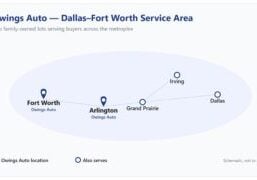
Owings Auto in the Dallas–Fort Worth area is one dealer that works this way. It finances its own used inventory in-house and, unlike most in-house lots, publishes its APR options — 15.9% to 17.9% — up front instead of after approval. Every customer receives a printed price sheet with the sale price, down payment, and weekly payment, approval is based on a $2,000/month net income minimum rather than a credit score, and each car comes with a free 24-month / 24,000-mile Service Contract. For how that model compares with a bank loan, see our guide to buying a reliable used car in Fort Worth.

Rebuilt-title cars close the door on most bank loans — clean-title in-house financing often stays open.
How a Rebuilt Title Affects Insurance
You can insure a rebuilt-title car in Texas, but full coverage is harder to get and pays out less if the car is totaled again. Liability-only coverage — the state minimum — is widely available, so you can legally register and drive the car. Comprehensive and collision are the sticking point: many standard carriers decline them on a rebuilt title because they can’t verify the car’s pre-damage condition, and the specialty carriers that do offer full coverage tend to charge more.
The bigger issue is the payout, not the premium. If a rebuilt-title car is totaled a second time, the insurer pays out on a value that’s already discounted 20–40% — so you rarely recover what you put in. Before you commit to a specific rebuilt car, get an actual insurance quote for full coverage on that exact VIN. A quote that comes back liability-only, or dramatically more expensive than the clean-title equivalent, is real information about how the market values the car.
How a Rebuilt Title Affects Resale Value
A rebuilt title permanently lowers a car’s value by roughly 20–40%, and because the brand never clears, that discount hits you again every time you sell or trade it. You inherit the discount going in and pass it along coming out. The one buyer who ever escapes it is the person who keeps the car until the end of its life.
It also narrows your future exit. Many franchise dealers won’t take a rebuilt-title car on trade at all, and the ones that do discount it heavily or send it straight to auction. That’s worth pricing in now: if you might want to trade up in a few years, a rebuilt title makes that harder and cheaper for you, not the seller. For most buyers, the honest way to think about a rebuilt car is as a keep-it-and-drive-it purchase, not an asset you’ll recover value from later.
The Bottom Line
Buy a rebuilt-title car only if the damage was cosmetic, your own mechanic clears the frame and airbags, the price beats clean-title value by 20–40%, and you plan to keep it for years. Hit all four and a hail-damaged or lightly bumped rebuild can be a genuinely smart way to stretch a budget. Miss any one of them, especially on a flood, fire, or airbag car, and the “deal” costs you in financing, insurance, resale, and possibly safety.
If the appeal of a rebuilt title is really about price and credit rather than the specific car, compare it honestly against a clean-title used car with in-house financing before you decide. In the Dallas–Fort Worth area, Owings Auto has helped more than 60,000 customers buy cars over 40 years from its Fort Worth and Arlington locations, financing every clean-title vehicle in-house and putting the full price in writing before you decide. It’s open Monday through Saturday and closed Sundays. Browse the current inventory or apply online to see what you qualify for — no rebuilt-title guesswork required.
Frequently Asked Questions
Can a rebuilt title ever be changed back to a clean title in Texas?
No. In Texas the “Rebuilt Salvage” brand is permanent. Once a vehicle has been branded, that brand stays on the title for the life of the car, no matter how well it was repaired or how many times it changes owners. Any seller promising to “clear” or “wash” the title is describing title fraud.
Is a salvage title the same as a rebuilt title?
No. A salvage title means the car was declared a total loss and legally cannot be registered or driven on Texas roads. A rebuilt (Rebuilt Salvage) title means that same car was repaired and passed a state inspection, so it can be titled, registered, and driven again. Buying a car that still holds a salvage title means you own something you can’t legally drive yet.
Will a rebuilt title show up on a Carfax or VIN check?
Yes. Title brands are reported and appear on Carfax or AutoCheck, and the free NICB VINCheck tool flags salvage and theft records. Always run a full history report before buying, because it also shows when and where the car was branded, which hints at the type of damage.
How long does a rebuilt title affect a car’s value?
Permanently. A rebuilt title typically lowers a car’s value by 20% to 40% below clean-title Kelley Blue Book value, and because the brand never clears, that discount follows the car every time it is sold or traded in.
Are rebuilt-title cars reliable?
It depends entirely on what caused the damage and how well it was repaired. A car rebuilt after hail or a minor collision, with the frame and airbags intact, can be perfectly reliable. A car rebuilt after a flood, fire, or major structural damage often develops electrical or safety problems later, which is why an independent inspection is essential before you buy.