What to Check Before Buying a Used Car: The Complete Inspection Checklist
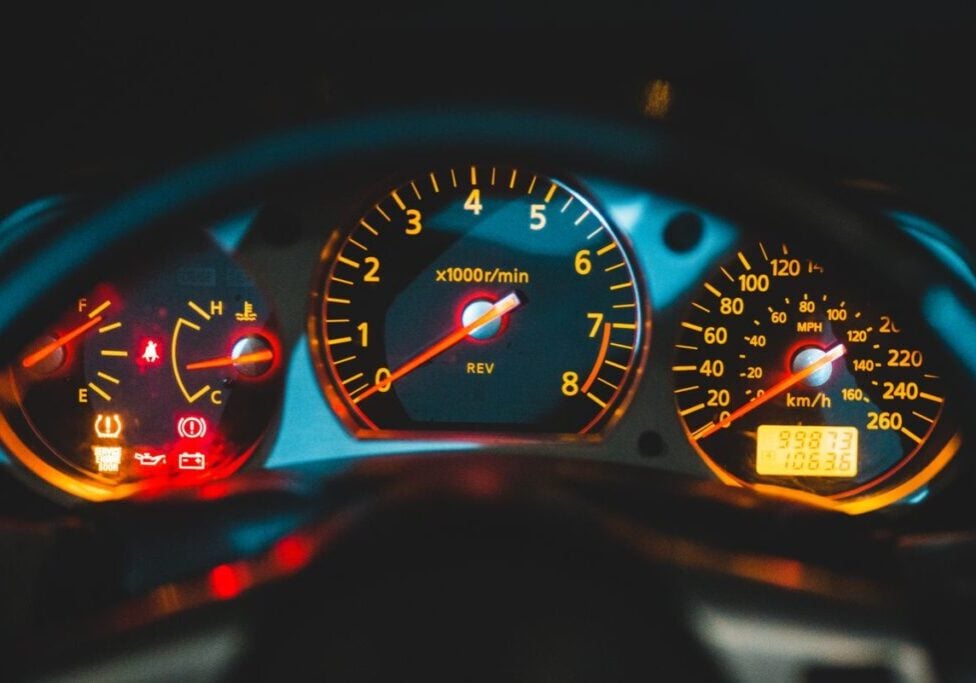
Every used car looks its best the day you go to see it — washed, vacuumed, and pulled to the front of the lot, with the seller having decided what you probably won’t notice. A good inspection is the work of getting past that first impression to what a clean exterior is meant to hide.
This is the checklist we’d hand a friend before they went to look at a car: what to verify before you leave the house, what to check by hand in the driveway, what to feel for on the road, and the findings serious enough to walk away over. Work through it in order — paperwork first, body and engine next, road last — because that sequence saves you the most wasted trips.
Quick Answer
Before buying any used car, confirm the title is clean and in the seller’s name, then run the VIN through a history report and the free recall database. Inspect the car cold and in daylight: matching paint and even panel gaps, no structural rust, fluids that are the right color and not burnt, every warning light behaving at key-on, and a test drive that tracks straight, shifts smoothly, and stops without pulling. The one problem you can’t cheaply fix is frame or accident damage, so if anything points to it, walk away. When you’re not sure, pay for an independent inspection — it costs less than the first repair it catches.
Before You See the Vehicle
The most valuable part of a used-car inspection happens before you ever stand next to the car. Ten minutes online tells you whether a car is even worth the drive, and it hands you the two or three questions that separate an honest seller from one hoping you won’t ask.
VIN and history report
The 17-character VIN sits in the lower corner of the windshield and on a sticker inside the driver’s door jamb. Before anything else, confirm those two match each other, and match the number on the title and the listing. A VIN that doesn’t agree across all four places is the clearest sign of a cloned or stolen car, and it’s the one red flag no repair or discount can fix.
Run that VIN through a paid history report and the free NICB VINCheck for salvage and theft records, then read it for the story it tells over time. A several-month gap with no registration, a sudden move across state lines, or three owners in two years all describe a car being passed along faster than a sound one usually is. A history report only shows what was reported to it, not what actually happened to the car — it’s the start of your inspection, not the end.
Title — and who holds it
Ask to see the actual title before you drive out, and check two things: that it’s clean (no salvage, rebuilt, flood, or lemon brand), and that the name on it matches the person selling the car. A seller who “just bought it and hasn’t retitled it yet” is often a curbstoner — an unlicensed dealer flipping cars as a private party to dodge inspection and consumer-protection rules.
If a lien is still on the title, the car is collateral for someone else’s loan, so you need the lien release in hand before any money moves. Branded titles carry their own math; if the car you’re looking at is one, our guide on whether to buy a car with a rebuilt title covers when it’s worth it.
Price it against the market
Look up the exact trim, options, and mileage on Kelley Blue Book or Edmunds, then compare against three similar local listings rather than the seller’s number. That keeps you from overpaying and, more usefully, flags a car priced suspiciously low. A car listed thousands under comparable ones isn’t a gift; it’s a question to answer before you drive out, because the seller already knows something you don’t.
Exterior Inspection
Inspect the body in direct daylight, never under showroom lights and never right after a wash — beading water hides swirl marks and the gaps that give away bodywork. Walk the whole car once, slowly, then come back to whatever caught your eye.
Paint, panels, and hidden repairs
Crouch at each end and sight down the panels at a low angle. Factory paint is uniform; a repainted panel shows a faint color shift, a rougher “orange-peel” texture, or overspray on the rubber trim and window seals.
Overspray is the tell most buyers miss — factories paint panels before assembly, so paint on a seal means that panel came off and went back on, usually after a collision. Uneven panel gaps, or a door, hood, or trunk that needs a shove to sit flush, point to the same repair.
Rust: structural vs. cosmetic
Not all rust matters equally, and the difference is worth thousands. Surface rust on the exhaust, rotors, or a few bolt heads is normal and cosmetic. What you’re hunting for is structural rust — on the frame rails, subframe, rocker panels, strut towers, and the brake and fuel lines underneath — because rust there weakens crash protection and turns cheap repairs into expensive ones.
Bubbling paint along the door bottoms and wheel arches means rust is already working outward from the inside, and fresh, uneven undercoating on an older car is sometimes sprayed on to bury corrosion the seller would rather you didn’t find.
Tires, glass, and lights
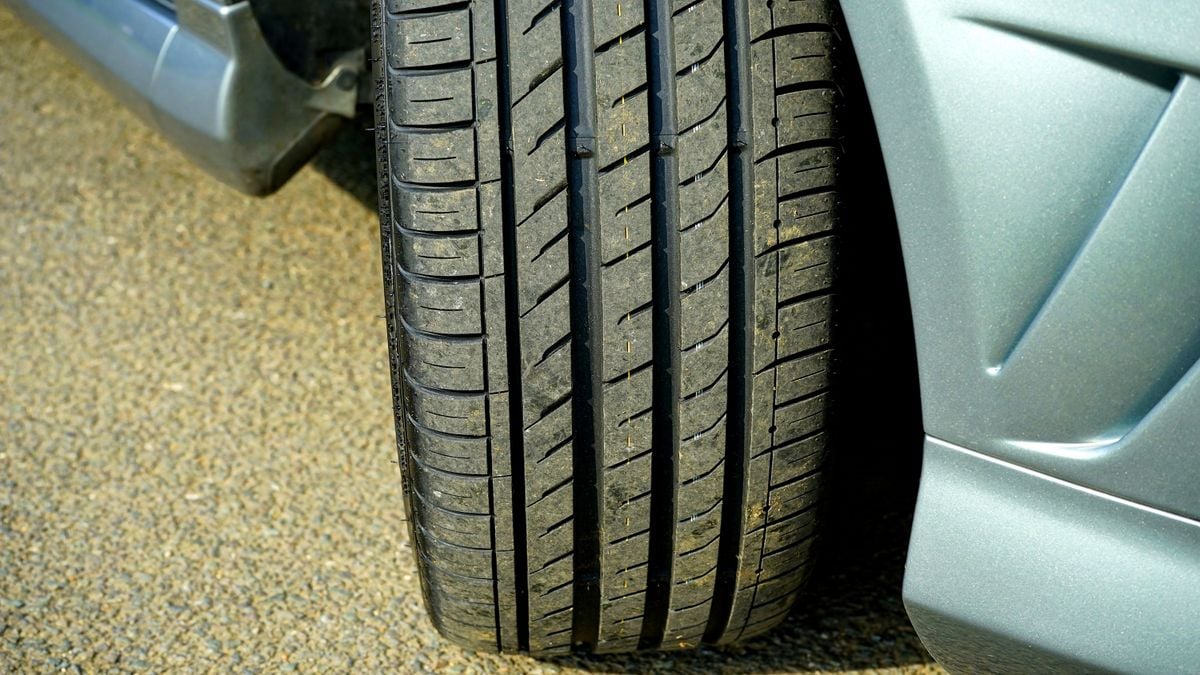
The tires tell you more than their tread depth. Run your hand across each one: wear that’s heavier on an edge, down the middle, or scalloped is rarely about the tires themselves. Uneven tire wear often costs far more than replacing the tires, because it’s usually the symptom of a suspension or alignment problem you’ll inherit.
Check the DOT date on the sidewall (the last four digits are the week and year) — rubber hardens and cracks after about six years no matter the tread — and treat mismatched brands or sizes as a sign of a cost-cutting owner or tires replaced after damage.
A windshield chip can usually be filled, but a crack in the driver’s line of sight is a replacement bill. Check the small date stamp in the corner of each pane: one window newer than the rest was replaced, often after a break-in or a collision. For the lights, moisture inside a headlight housing means a cracked seal that will keep letting water in, and one lens clearly newer or clearer than its partner often marks a front-end repair.
Under the Hood
Ask the seller to leave the car cold and unstarted when you arrive — you’ll want a genuine cold start later, and a cold engine is safer to inspect. Pop the hood and give it five minutes; a few fluids tell you how the car was cared for.
Oil, coolant, and head gasket
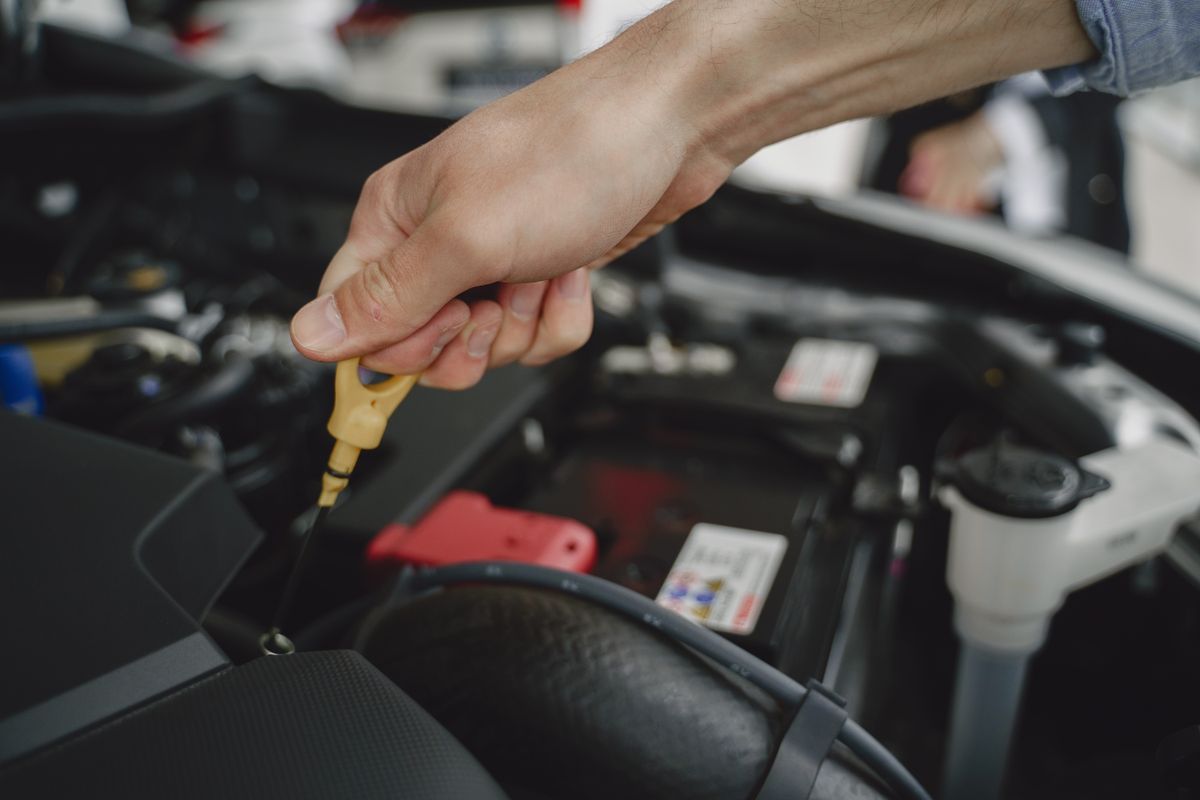
Pull the oil dipstick, then unscrew the oil filler cap and look at its underside: a tan, frothy “mayonnaise” film there is the classic sign of coolant mixing into the oil — usually a failing head gasket, one of the most expensive repairs on this list. Metallic glitter in the oil points to internal engine wear. Check the coolant cold, never on a hot radiator: rusty-brown or oily coolant signals a neglected cooling system, or that same head-gasket trouble from the other side.
Battery, belts, and hoses
Check the date sticker on the battery — most last three to five years, so one near that age is a cost you’ll cover soon, and heavy corrosion on the terminals can mean a charging problem, not just age. Glance at the serpentine belt for cracks or a shiny glazed surface, and squeeze the big rubber hoses; they should feel firm, not mushy or rock-hard.
Leaks and fluids
Look at the ground where the car has been parked, before and after the drive. Clear water is just A/C condensation, but any colored puddle — oil, coolant, transmission, or power-steering fluid — is a leak worth pricing before you commit.
If there’s a transmission dipstick, pull it: brown, burnt-smelling fluid means the transmission is worn out, a repair that often costs more than the car is worth (many newer cars are sealed, so the drive is your only read). Dark brown brake fluid won’t fail the car, but it’s a reliable sign the maintenance was let slide.
Interior Inspection
The interior is where you catch two things: expensive electronics sold “as-is,” and clues that the car’s history doesn’t match its story. Test everything, and be skeptical of a cabin that tries too hard to smell new.
Warning lights
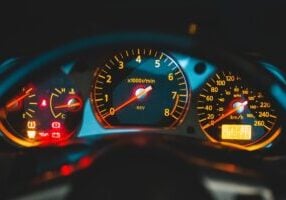
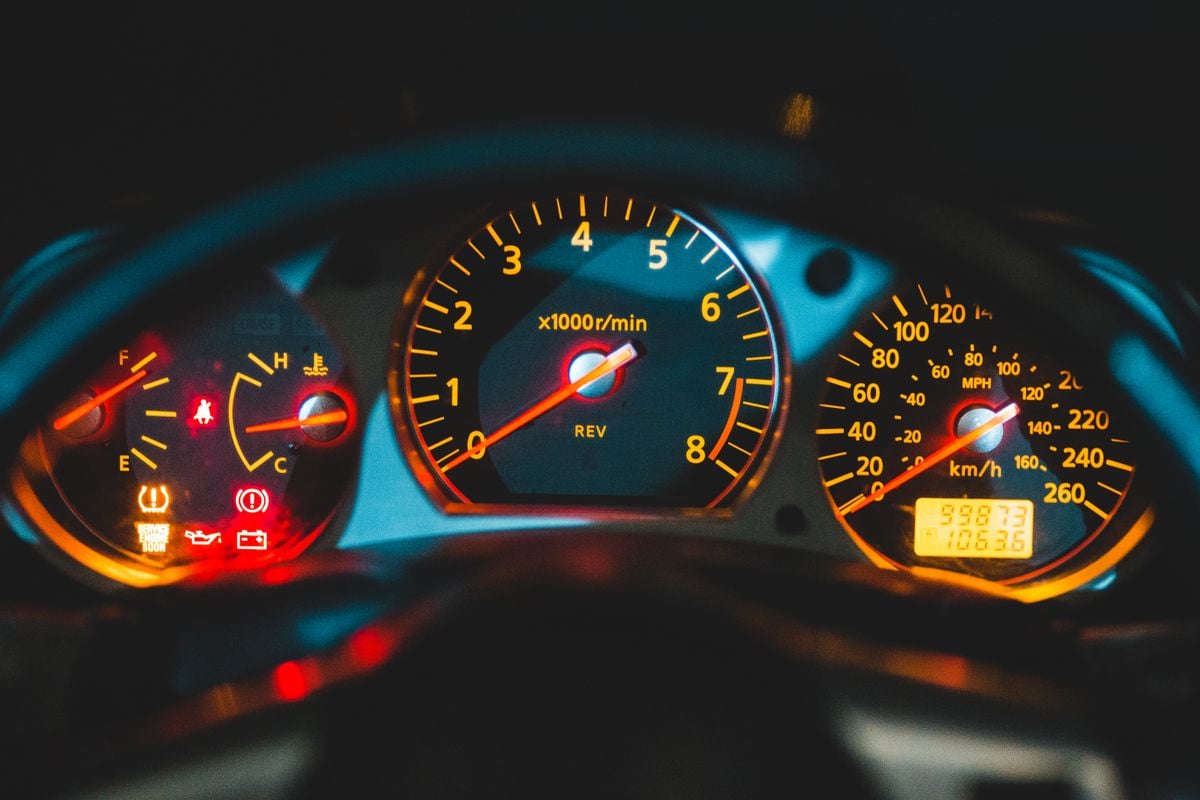
Turn the key to “on” without starting the engine and watch the instrument cluster. Every warning light — check engine, ABS, airbag, oil, battery — should illuminate briefly, then go out once the engine runs. A light that stays on after the engine is running points to a fault worth diagnosing before you buy.
Electronics, A/C, and seats
Work every switch once — windows, locks, mirrors, seats, sunroof, the infotainment screen, Bluetooth, the backup camera, USB ports. Interior electronics are expensive to fix and almost never covered on a private sale, so a dead one you catch now is money saved.
Run the A/C on max; if it’s blowing only a few degrees cooler than the cabin, the compressor or refrigerant is weak — a costly repair. Then read the wear: a driver’s seat, wheel, and pedals that look heavily used on a “low-mileage” car point to a rolled-back odometer.
Airbags and odors
Confirm the airbag light behaved at key-on and that the steering-wheel and dashboard airbag covers look factory, with no aftermarket seams. If the car has any accident in its history, have the airbag system scanned before you buy — the rebuilt-title inspection guide covers exactly how.
Finally, trust your nose. A musty, mildewy smell points to a water leak or past flooding; a sweet smell in the cabin usually means a leaking heater core; and stale cigarette smoke soaks into the materials and is nearly impossible to remove.
Be most suspicious of a car drowning in air freshener — that’s often there to mask one of those smells rather than to be polite. A tree hanging from the mirror is a clue, not a courtesy.
During the Test Drive
A test drive is a diagnostic session, not a joyride. Turn the radio off, keep the windows up for the first few minutes so you can hear the car, and drive it the way you actually will: city streets, one rough road, and highway speed. Twenty minutes is the minimum.
Cold start and engine
Insist the engine is stone cold for the first start — it reveals problems that vanish once the car warms up. Watch the exhaust: blue smoke means it’s burning oil, and white smoke that lingers points to coolant reaching the cylinders, both expensive.
A rattle that quiets after a few seconds can be a worn timing chain or lifters. Then the idle should settle smooth and steady, and acceleration should come on cleanly — no hesitation, no flashing check-engine light.
Steering, braking, and suspension
On a straight, flat, empty stretch, loosen your grip for a second — the car should track straight. Pulling to one side means alignment, worn suspension, or, with uneven tire wear, possible frame damage; an off-center steering wheel points to the same.
Brake firmly from about 30 mph when it’s clear behind you: pulling means a sticking caliper, a pulsing pedal means warped rotors, grinding means pads worn to metal, and a soft pedal means air or a leak.
For the suspension, push down hard on each corner — it should settle in one bounce, not keep rocking — and listen over bumps for clunks from worn struts or bushings.
Transmission, highway, and noises
Notice how the car shifts. An automatic should move through its gears smoothly — no hard jerks, no long delay when you select Drive or Reverse, and no revving between gears while the car fails to accelerate, which means it’s slipping. A manual’s clutch should grab in the middle of the pedal, not right at the top.
At highway speed, a vibration in the wheel usually means an unbalanced or bent wheel, a wander means alignment, and a hum that rises with speed often points to a failing wheel bearing.
The noises are diagnostic once you know what they mean:
| Noise | When it happens | Likely cause |
|---|---|---|
| Clunk or rattle | Over bumps | Worn struts, bushings, or sway-bar links |
| Hum or whine | Rises with speed | Failing wheel bearing or differential |
| Grinding | When braking | Brake pads worn down to metal |
| Squeal | On startup or accelerating | Loose or glazed serpentine belt |
| Ticking or knocking | From the engine | Low oil, worn lifters, or an exhaust leak |
Documents to Verify
By the time you’re ready to buy, the paperwork should confirm what the car already told you — get all of it in hand before any money moves:
- Title — clean and in the seller’s name, with the VIN matching the car across the windshield, door jamb, and title; if a lien exists, get the release.
- Maintenance records — a continuous folder of receipts is worth more than any verbal reassurance, and proof of interval jobs like a timing belt keeps you from paying for them twice; multi-year gaps suggest neglect.
- Recall history — check open recalls by VIN at NHTSA; the fixes are free, so an unaddressed recall just means no one bothered.
Red Flags That Should Make You Walk Away
Most problems are bargaining chips — worn tires or a weak battery are reasons to negotiate, not to leave. A few findings are different: they either can’t be fixed for reasonable money or mean the seller isn’t being honest. Either one is a reason to hand back the keys:
- The seller won’t let you take the car to an independent mechanic. An honest seller has nothing to hide.
- The VIN doesn’t match across the car and the title, or the title isn’t in the seller’s name.
- Structural rust on the frame or subframe, or fresh undercoating that seems meant to hide it.
- A “mayonnaise” oil cap, or brown, burnt-smelling transmission fluid — both point to repairs that can exceed the car’s value.
- Interior wear that doesn’t match the odometer, or a history report full of unexplained gaps.
- High-pressure “cash only, today only” tactics. A real deal survives a day of thinking.
The cheapest used car is rarely the cheapest to own. A single one of these red flags can erase every dollar the low price seemed to save you.
Is a Professional Inspection Worth It?
For most buyers, yes — especially if you’re not confident running the checks above yourself. A pre-purchase inspection from an independent, ASE-certified mechanic runs roughly $100 to $250 and includes putting the car on a lift, scanning its computer, and road-testing it: the three things hardest to do well in a stranger’s driveway.
A professional inspection usually costs less than the first unexpected repair it catches, which makes it the highest-return money in the whole purchase. Use your own mechanic, never one the seller recommends, and treat any resistance to the idea as its own answer.
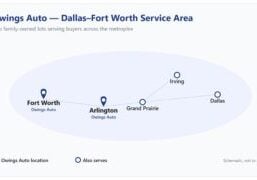
There’s one situation where much of this burden shifts off you: buying from a dealership that reconditions its cars in its own service shop instead of selling them exactly as they came in, and backs them with a service contract rather than an “as-is” sale. In the Dallas–Fort Worth area, Owings Auto reconditions its inventory in an on-site service shop and includes a free 24-month / 24,000-mile Service Contract on every vehicle, covering the engine, transmission, water pump, fuel pump, and radiator — the same big-ticket systems this checklist is built around. That doesn’t replace your own eyes, but it changes what happens when something turns up after the sale.
Printable Used Car Inspection Checklist
Print this and take it with you. Work top to bottom — the order is deliberate, so you catch the deal-breakers before you fall for the paint.
Before you go
- ☐ VIN matches across windshield, door jamb, title, and listing
- ☐ History report and free NICB VINCheck run; no unexplained gaps
- ☐ Title clean and in the seller’s name; lien released if any
- ☐ Price checked against three comparable local listings
Exterior
- ☐ Even panel gaps, consistent paint, no overspray on trim or seals
- ☐ No structural rust on frame, rockers, or strut towers
- ☐ Even tire wear, DOT date under six years, matching tires
- ☐ Glass crack-free in the driver’s view; all lights work, no moisture inside
Under the hood (cold)
- ☐ Oil amber, no “mayonnaise” film on the filler cap
- ☐ Coolant clean-colored, no oily film on top
- ☐ Battery within date; belts uncracked; hoses firm
- ☐ No colored leaks under the car; transmission fluid red, not burnt; brake fluid amber, not dark
Interior
- ☐ All warning lights flash at key-on, then clear (none stay lit)
- ☐ Every window, lock, screen, camera, and USB port works
- ☐ A/C blows cold; no musty, sweet, or heavily masked odors
- ☐ Interior wear is consistent with the odometer reading
Test drive (20+ minutes, cold start)
- ☐ Clean cold start, no blue or white smoke, smooth idle
- ☐ Tracks straight, wheel centered, brakes firm and even
- ☐ Smooth shifts, no slipping, delay, or grinding
- ☐ No vibration, wander, or rising-pitch noise at highway speed
Before you pay
- ☐ Maintenance records and major-service receipts in hand
- ☐ Open recalls checked at NHTSA
- ☐ Independent inspection done — or offered and refused, which means walk
The Bottom Line
A used-car inspection isn’t about finding a perfect car — there’s no such thing on the used market. It’s about knowing exactly what you’re buying, so the price matches reality and nothing on this list surprises you three weeks after you drive home. Most of what you find is ordinary wear you can negotiate around; the point is to keep the one problem you can’t negotiate — a bent frame, a dying transmission, a title that isn’t what it claims — from slipping past you.
If you’d rather start from cars that have already been through much of this, a dealership that finances and services its own inventory is a different starting line than a driveway sale. Owings Auto has helped more than 60,000 customers buy cars over 40 years from its Fort Worth and Arlington locations, financing every vehicle in-house — with APR options of 15.9% to 17.9% put in writing up front — and giving each buyer a printed price sheet with the sale price, down payment, and weekly payment before they decide.
It’s open Monday through Saturday. When you’re ready to move from checklist to keys, browse the current inventory or see what you qualify for.
Frequently Asked Questions
What is the most important thing to check when buying a used car?
The car’s structure and any history of major accident repair. Worn tires, brakes, or a weak battery are normal and negotiable; a bent frame or hidden collision damage is neither, because it compromises safety and can’t be fixed for anything close to reasonable money. If a single check points to structural or frame damage, that finding outranks everything else on the list.
Should you buy a used car with the check engine light on?
Not without scanning it first. A free code scan at most auto-parts stores, or a $25 OBD-II reader, tells you whether it’s a $20 sensor or a $2,000 catalytic converter. Never accept “it just needs a sensor” without seeing the actual code.
How many miles is too many on a used car?
There’s no hard ceiling; how the car was maintained matters more than the odometer. A well-documented car with 130,000 highway miles and full service records often outlasts a neglected one with 60,000 stop-and-go miles and no paperwork. Read the maintenance history and the physical wear before you judge a car by its mileage alone.
What used car problems are the most expensive to fix?
The transmission, major engine work such as a head gasket, and structural or frame damage top the list, and each can cost more than the car is worth. That’s why the under-hood fluid checks and the test drive in this guide focus on exactly those systems: they’re where a small inspection prevents the largest bills.
How long should it take to inspect a used car?
Plan on about 45 minutes to an hour for a thorough walkthrough plus a 20-minute test drive; a professional pre-purchase inspection takes a mechanic roughly the same. A seller who rushes you or can only spare ten minutes is a reason to slow down, not to speed up.